Inquiry
Form loading...
Picking the right factory from China's top 10 Big Bore CNC lathe producers isn’t just about comparing price lists—there’s a lot more to consider. You’ll want to look closely at things like spindle capacity, chuck diameter, guideway design, gearbox setup, and what their inspection records show. Just because a machine has a big swing doesn’t automatically mean it’s reliable for heavy-duty cutting—that’s a common misconception.
John Saunders, who founded NYC CNC, once said, “The machine is only one part of the process,” and honestly, that rings true here. Buying a lathe with a super powerful spindle is great, but the real test is during continuous operation. Try watching the machine cut through a thick steel pipe—listen for any vibrations, check how smooth the surface finish is after a few passes. Those small details can reveal big weaknesses that you might otherwise overlook.
In this guide, I’ve looked at ten Chinese manufacturers who work with industries like oil & gas, energy, transportation, and general engineering. I’ve considered their experience, support services, customization options, quality control standards, delivery reliability, and how they handle after-sales service. Visiting their factories and chatting honestly with current users is pretty important too—it gives you a real sense of what’s what.
Sure, some suppliers may boast about impressive specs on paper. But don’t get fooled—performance can often fall short of the marketing hype. So, it’s worth digging a little deeper.
A trustworthy big bore CNC lathe supplier should be upfront about tolerances, provide test-cut examples, share electrical documentation, and support you with replacement parts. It’s also key to find out if they offer installation training. Honestly, regional service capabilities might matter even more for uptime and smooth operation than a tiny discount on the price.
No ranking setup is perfect, because every shop’s needs differ. If you’re making big flanges, rigidity might be your top priority. But if you’re working with long pipes, bore size and automation options could be more important. Ultimately, the right choice depends on what material you’re working with, the length of your pieces, tolerance requirements, and your daily workload. Think of this as a helpful starting point—just remember, technical vetting is essential before making any final decisions.
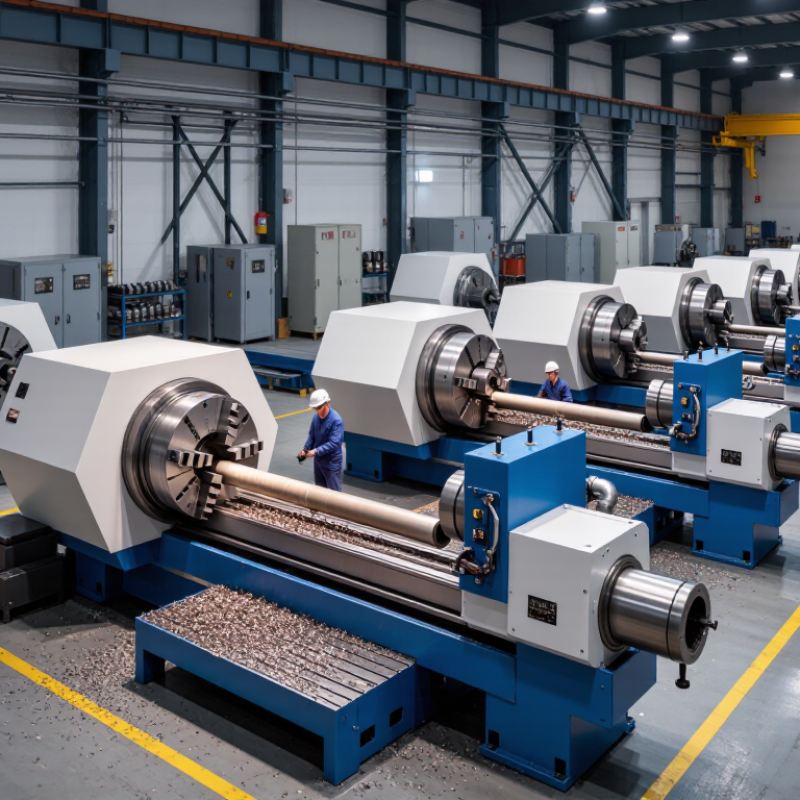
China’s big bore CNC lathe industry is expanding with demand from energy, shipbuilding, rail, and heavy equipment manufacturers. The term “big bore” has no universal definition, but many workshops use spindle bores above 100 millimeters. Larger models may exceed 300 millimeters, allowing operators to machine long shafts and thick-walled pipes without repeated repositioning.
The China Machine Tool Industry Association reported that China’s machine tool industry recorded moderate revenue growth in 2024, while exports continued gaining importance. UN Comtrade data also shows China remains a major exporter of metalworking machinery, although product quality differs widely between factories. This matters when comparing a Big Cnc Lathe supplier. Factory experience, thermal control, guideway rigidity, and after-sales response should receive more attention than catalog size.
A practical inspection should include a test cut on alloy steel, not only a factory demonstration. Buyers can check spindle runout, boring-bar stability, chip evacuation, and dimensional drift after several hours. The International Trade Centre’s machinery trade statistics help compare export activity, but they do not prove machining accuracy. That is a limitation worth admitting. Some workshops present impressive specifications, yet their process records remain incomplete. Independent audits, sample reports, and verified customer references provide stronger evidence than polished brochures.
| Rank | Manufacturing Cluster | Typical Spindle Bore | Typical Max. Swing | Typical Turning Length | Typical Spindle Speed | Common Machine Configuration | Main Application Areas |
|---|---|---|---|---|---|---|---|
| 1 | Jiangsu Manufacturing Belt | 105–130 mm | 800–1,200 mm | 1,000–3,000 mm | 1,200–2,500 rpm | Horizontal, 2-axis or live-tool turret | General engineering, shafts, flanges and hydraulic components |
| 2 | Zhejiang Machine-Tool Cluster | 105–160 mm | 700–1,100 mm | 800–2,500 mm | 800–2,000 rpm | Heavy-duty horizontal turning center | Oilfield parts, large couplings and industrial rollers |
| 3 | Liaoning Heavy-Equipment Region | 130–225 mm | 1,000–2,000 mm | 1,500–6,000 mm | 250–1,200 rpm | Extra-heavy horizontal lathe | Energy equipment, shipbuilding and large structural parts |
| 4 | Shandong Industrial Corridor | 105–180 mm | 900–1,500 mm | 1,000–4,000 mm | 600–1,800 rpm | Slant-bed or flat-bed CNC lathe | Mining machinery, agricultural equipment and pressure vessels |
| 5 | Guangdong Precision-Machinery Area | 100–130 mm | 600–1,000 mm | 600–2,000 mm | 1,500–3,000 rpm | Compact production turning center | Automation components, motor parts and short-run precision work |
| 6 | Hebei Large-Component Manufacturing Area | 120–200 mm | 1,000–1,800 mm | 1,500–5,000 mm | 400–1,500 rpm | Flat-bed heavy-duty CNC lathe | Steel processing, railway components and heavy shafts |
| 7 | Anhui General-Engineering Cluster | 105–150 mm | 800–1,300 mm | 1,000–3,500 mm | 800–2,000 rpm | Two-axis CNC lathe with steady rest | Pump bodies, transmission parts and construction machinery |
| 8 | Hubei Automotive and Industrial Zone | 100–125 mm | 650–1,000 mm | 600–2,500 mm | 1,200–2,500 rpm | Production CNC lathe with bar-feeding capability | Vehicle axles, drive components and medium-volume production |
| 9 | Fujian Export-Oriented Machinery Area | 100–150 mm | 700–1,200 mm | 800–3,000 mm | 900–2,200 rpm | Modular horizontal turning center | Marine fittings, valves, pumps and custom export orders |
| 10 | Sichuan and Chongqing Equipment Region | 105–180 mm | 800–1,400 mm | 1,000–4,000 mm | 600–1,800 rpm | Heavy-duty turning center with rigid bed | Aerospace support equipment, energy parts and precision shafts |
Note: The table presents anonymized regional manufacturing profiles and typical market specification ranges. Actual machine capabilities vary by model, configuration, workholding system and customer requirements.
Check spindle bore, chuck diameter, bar capacity, turning length, and spindle torque. A test cut matters more than polished showroom photos.
Ask for videos cutting steel tubing or heavy shafts. The sample should show dimensions, surface finish, cycle time, and cutting stability.
Review machining areas, casting storage, assembly records, and final inspection stations. Look for clean workspaces and serial-numbered inspection reports. Cleanliness helps, but it is not proof.
Request spindle runout data, positioning accuracy results, and load-testing records. Measurements should use traceable instruments. Certificates alone prove little.
A physical visit is useful, but a live video tour can also reveal important details. Ask to see assembly, calibration, and inspection areas in real time. Still, hidden problems may remain.
Provide maximum diameter, length, material, chuck size, and required spindle bore. The factory should explain its calculations clearly. Request a factory acceptance test using your drawing and material.
Clarify training, electrical documents, spare parts, remote troubleshooting, warranty terms, and response times. Ask whether replacement encoders and special chucks are readily available. Support can decide production uptime.
Include tooling, installation, export packing, commissioning, and service travel. Confirm electrical standards before payment. A low quotation may hide missing parts or weak engineering support. My checklist could still miss something.
China’s big bore CNC lathe industry has developed into a significant manufacturing sector, serving demanding applications that require large spindle capacities, deep boring performance, high rigidity, and reliable long-term operation. This article explains the key criteria for evaluating big bore cnc lathe factories, including machine accuracy, structural strength, CNC system compatibility, production capacity, quality control, customization support, delivery reliability, and after-sales service. It also presents a practical method for selecting and comparing leading Chinese manufacturers without relying solely on price.
The profiles of the top ten factories focus on their manufacturing capabilities, engineering expertise, available machine specifications, testing procedures, and compliance with recognized production standards. A comparison of machinery, technical resources, and service quality helps buyers understand which suppliers are better suited for oil and gas equipment, heavy industrial components, large shafts, pipes, and other precision machining applications. The final section offers guidance on assessing technical requirements, factory reliability, communication, inspection processes, total ownership costs, and long-term cooperation before choosing the right Chinese supplier.