inquiry
Inquiry
Form loading...
0%

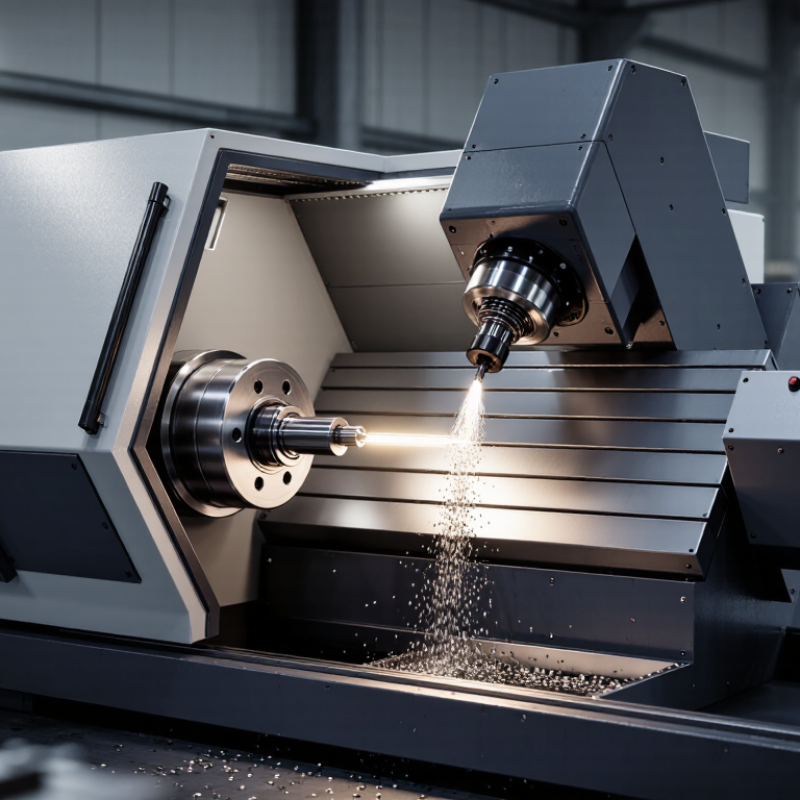
So, what exactly is a Slant Bed CNC Lathe? Think of it as a computer-controlled turning machine, but with a twist—the bed is tilted behind where the cutting happens. This tilt isn’t just a design choice; it actually helps with chip ejection—fancy way of saying the chips fall away from the work area instead of piling up around the tool or chuck. Plus, it can make things more rigid, give better visibility, and make automated loading a whole lot easier. Imagine hot metal chips sliding down a smooth steel slope, while coolant flows back towards the filtration system—that’s the visual, at least. The design may look simple on the surface, but how well it performs really depends on factors like spindle power, guideway quality, tooling, and how you program it.

According to Grand View Research, the global CNC machine market was valued around USD 83.31 billion in 2023—and experts expect it to keep growing through 2030. Now, that number covers the whole CNC market, not just slant-bed machines, but it does show that manufacturers are investing more and more in faster, more accurate turning systems. Dr. Scott Smith, a well-known researcher in machining and co-author of CNC Machining Technology, hits the nail on the head when he says: “Machine tools must provide rigidity, accuracy, and repeatability to produce quality parts.” That’s exactly what a slant bed CNC lathe aims for with its inclined structure. It generally means shorter setups, better chip control, and more consistent results. But—here’s the thing—it’s not a magic fix. If workholding isn’t right, or the tooling isn’t suited, or the cut conditions are unstable, accuracy can suffer pretty quickly. So, in this guide, we’ll dig into how this design actually works, where it really shines, and what questions you should ask before you decide to go with one.
What Is a Slant Bed CNC Lathe and How Does It Work?

Definition and Core Purpose of a Slant Bed CNC Lathe

A slant bed CNC lathe is a computer-controlled turning machine with an inclined guideway and workholding system. Its defining feature is the angled bed, commonly positioned around 30 or 45 degrees. This geometry supports the cutting zone while allowing chips and coolant to move away from the workpiece. In a Slant Guideway Cnc Lathe, the tool turret usually travels diagonally, reducing interference during turning, drilling, and boring operations.

The core purpose is controlled material removal with better rigidity, access, and production consistency. The inclined structure can shorten the distance between the cutting tool and support points, helping reduce vibration during heavy cuts. According to Grand View Research, the global CNC machine market was valued at approximately USD 88.7 billion in 2023. That figure reflects broad demand for automated machining, although it does not measure slant bed machines separately. The distinction matters.

A slant bed design also improves chip evacuation, especially when machining steel, aluminum, or cast materials at repeated cycle times. The U.S. Bureau of Labor Statistics continues to identify computer-controlled machine tool operation as a significant manufacturing occupation, reinforcing the need for reliable automation skills. Technical reality is less tidy. A poorly set tool, weak workholding, or incorrect cutting speed can still damage accuracy. The angled bed helps, but it cannot replace engineering judgment. That trade-off is easy to overlook.

Main Structural Components and Their Functions

A slant bed CNC lathe uses an inclined machine bed to support and align its main working components. This angled layout improves chip flow, especially when coolant washes metal fragments away from the cutting zone. It also creates a compact, rigid workspace.

The headstock holds the spindle, chuck, and drive system. The spindle rotates the workpiece at controlled speed and torque. The chuck grips the material, while the servo motor adjusts rotation accurately during cutting. Opposite the chuck, a tailstock can support long shafts with a center. Some machines replace it with a programmable support unit.

The turret carries multiple cutting tools and indexes them into position. Its stations may hold turning tools, boring bars, drills, or powered tools. Linear guideways help the carriage move smoothly along the X and Z axes. Ball screws transfer servo motor movement with limited backlash. The CNC control interprets programmed coordinates and synchronizes these movements.

The enclosure contains coolant, chips, and moving parts. A chip conveyor may remove waste continuously, but it still needs regular cleaning. The slanted bed helps, yet it does not solve every chip problem. I still check guideway covers, chuck pressure, and tool alignment before demanding work. Small alignment errors can leave visible marks on a finished surface. No design is perfect. Performance depends on setup, maintenance, and operator judgment.

How the Slanted Bed Supports Cutting Operations

A slant bed CNC lathe angles its bed downward toward the operator. This geometry supports cutting operations in several practical ways. Chips fall away from the tool zone instead of collecting around the workpiece. Coolant can also reach the insert more directly. During heavy turning, that cleaner path helps reduce recutting and heat buildup.

The slanted structure usually improves access to the turret and cutting area. It can make tool changes faster and simplify inspection. Tool forces still travel through the spindle, chuck, and bed. Therefore, rigidity depends on the whole machine, not the angle alone. Small errors become visible. A poorly adjusted turret or worn insert can still damage surface quality. ISO 230-2 provides a recognized method for checking positioning accuracy. Deloitte’s 2024 Global Smart Manufacturing Survey reports that 86% of manufacturers view smart manufacturing as important for competitiveness. However, that figure does not prove every slant bed design performs equally. Testing remains necessary.

For a Cnc Dual-Head Cnc Lathe, the slanted bed can support chip evacuation around two spindle areas. Operators should verify clearance before synchronized cutting. Tips: Keep coolant nozzles aimed at the tool-workpiece contact point. Inspect chip channels every shift. Use shorter tool overhangs when possible. Check insert wear after the first trial cut. A brief cutting test often reveals vibration before production exposes it.

The Step-by-Step CNC Turning Process

A slant bed CNC lathe places its guideways at an angle, often around 30 to 60 degrees. This geometry lets chips fall away from the cutting zone. It also improves access for automatic part handling. Grand View Research valued the global CNC machine market at about USD 88 billion in 2023. That growth reflects demand for repeatable, digitally controlled production.

The process begins with a drawing, material specification, and tolerance review. An operator checks the workpiece diameter and selects a suitable chuck or collet. The part is then clamped firmly, with minimal runout. Next, the programmer creates a tool path using spindle speed, feed rate, and cutting depth. The machine may perform facing, turning, grooving, drilling, and threading in one setup. A probe or gauge verifies the first component before longer production runs. Small errors matter.

During cutting, coolant carries heat away and helps control surface finish. The operator watches vibration, chip shape, tool wear, and dimensional drift. A worn insert can create a tapered shaft, even when the program is correct. The U.S. Bureau of Labor Statistics reported that machinists held about 367,000 jobs in 2023, showing the continuing value of skilled supervision. Cnc Lathe And Cnc Milling systems may share software principles, but their cutting strategies differ. After machining, the part receives a final inspection with micrometers, gauges, or a coordinate measuring machine. One overlooked offset can ruin an otherwise precise batch.

What Is a Slant Bed CNC Lathe and How Does It Work?

The chart shows a representative CNC turning cycle for a 60 mm steel workpiece. A slant bed design improves chip flow and provides better access for automated loading, while the CNC control coordinates spindle speed, feed rate, tool movement, and cutting depth through each operation.

The sequence normally begins with workholding and tool positioning, followed by facing, rough turning, finish turning, threading or grooving, and parting-off. Actual cycle time varies with material, diameter, tooling, tolerances, and machine settings.

Tool Movement, Workpiece Rotation, and Chip Removal

A Cnc Lathe uses a slanted bed to support cutting operations with better chip flow. The angled structure lets chips fall away from the cutting zone instead of collecting around the tool. This design can also improve access for automatic handling and simplify cleaning. In daily operation, the difference is easy to see: hot chips slide toward the conveyor rather than forming a pile near the chuck.

The workpiece rotates inside the chuck while the cutting tool moves along controlled axes. One axis usually moves parallel to the spindle, while another moves toward or away from the centerline. Together, these movements create shoulders, tapers, grooves, and accurate diameters.

The spindle must maintain steady speed, especially during finishing cuts. Small changes in speed can leave visible marks. Tool movement is not always perfectly smooth, and vibration may appear when the setup is too long or poorly supported. That detail is often underestimated.

Tips: Keep the tool overhang short and check insert sharpness before production. Set the coolant stream toward the cutting edge, not merely at the workpiece. Inspect chip shape regularly. Long, stringy chips may signal poor feed control or a worn tool. A slant bed helps remove chips, but it cannot correct every machining mistake. I have found that a quick dry run can reveal clearance problems before metal is cut. It takes minutes. That habit prevents costly surprises.

Key Advantages, Applications, and Operating Considerations

A slant bed CNC lathe uses an angled machine bed to support the spindle, chuck, and cutting tools. This geometry helps chips and coolant move away from the cutting zone. It also improves access around the workpiece. During turning, the spindle rotates the material while programmed tools remove metal with controlled movements.

The design offers strong rigidity, especially during heavy roughing cuts. Shorter chip paths can reduce chip buildup near the tool holder. Many workshops use slant bed lathes for shafts, bushings, flanges, and threaded components. They suit repeated production because automatic tool changes and consistent programs reduce manual handling. Surface quality often improves when the machine, tool, and cutting data are matched carefully. Better does not mean perfect.

Operators should check workholding, tool offsets, coolant flow, and programmed clearances before cutting. A small offset error can damage a finished surface within seconds. Parts must sit securely in the chuck, with limited overhang whenever possible. Cutting speed, feed rate, and depth of cut should reflect the material and tool condition. Worn inserts may produce heat, vibration, or poor dimensions. Regular inspection is essential. Chip evacuation can still fail when material forms long, stringy chips. In that case, adjusting the insert geometry or cutting parameters may help. The angled bed also requires attention during cleaning, lubrication, and maintenance, because hidden chip pockets are easy to overlook.

What Is a Slant Bed CNC Lathe and How Does It Work? — Key Advantages, Applications, and Operating Considerations

Data Dimension Slant Bed CNC Lathe How It Works or Why It Matters Operating Considerations
Basic definition A computer-controlled turning machine with guideways mounted at an angle, commonly around 30° to 60°. The angled layout supports the carriage and cutting tool while the spindle rotates the workpiece around its central axis. The exact bed angle varies by machine design and should be considered when evaluating access, rigidity, chip flow, and footprint.
Primary machining operations External turning, facing, boring, grooving, threading, drilling, and parting-off. CNC programs coordinate spindle speed, axis movement, feed rate, tool selection, and cutting depth. Use the correct tool geometry, cutting data, coolant method, and workholding arrangement for the material and operation.
Axis configuration Most basic models use X and Z linear axes; live tooling, a second spindle, or a Y-axis may be added for more complex work. The X-axis controls tool movement toward or away from the spindle centerline, while the Z-axis controls movement along the workpiece. More axes can reduce secondary operations but increase programming, setup, maintenance, and collision-prevention requirements.
Chip evacuation The inclined bed helps chips move downward toward the chip pan or conveyor. Gravity assists the removal of chips from the cutting zone, reducing the chance of chip accumulation around the tooling. Long, stringy chips may still require chip breakers, high-pressure coolant, controlled feeds, or a chip conveyor.
Rigidity and vibration control The slanted structure can provide a compact, rigid support path for the carriage and cutting forces. Greater structural stiffness can help maintain dimensional accuracy and surface quality during demanding cuts. Actual performance depends on casting design, machine mass, guideway condition, tool overhang, workholding, and cutting parameters.
Typical production suitability Well suited to repeat production, small-batch manufacturing, and automated turning of rotational components. Programs can repeat toolpaths consistently after the work offset, tooling, and process parameters are verified. Cycle time is affected by rapid traverse speed, tool-change time, spindle acceleration, workholding, and loading method.
Common workpiece materials Steel, stainless steel, aluminum alloys, brass, copper alloys, cast iron, engineering plastics, and selected titanium alloys. The machine removes material using a single-point cutting tool or powered accessory tool, depending on the configuration. Material hardness, thermal conductivity, work-hardening tendency, and chip behavior determine tooling and coolant choices.
Workholding options Three-jaw or four-jaw chucks, collet systems, expanding mandrels, faceplates, and bar-feeding equipment. The workholding device transfers spindle torque to the part and maintains its position during cutting. Check gripping force, jaw condition, part projection, balance, clamping clearance, and maximum permitted spindle speed.
Tool capacity Many production machines use an indexing turret, commonly configured with approximately 8 to 12 tool stations; larger configurations are also available. The turret positions the selected tool accurately and reduces manual tool changes between operations. Confirm tool envelope, station type, driven-tool capability, coolant delivery, and clearance from the chuck and part.
Dimensional accuracy Suitable for close-tolerance turning when the machine, tooling, material, and process are properly controlled. The control system follows programmed coordinates while feedback devices and mechanical components support positioning accuracy. Verify accuracy through inspection; account for thermal growth, tool wear, spindle runout, insert condition, and machine alignment.
Surface finish factors Can produce consistent finishes through controlled feed rate, cutting speed, insert geometry, and machine rigidity. The programmed toolpath and stable cutting conditions reduce variation from part to part. Avoid excessive tool overhang, chatter, built-up edge, unsuitable nose radius, and incorrect feed or speed settings.
Automation potential Compatible with bar feeders, parts catchers, robotic loading, probing, tool monitoring, and in-process measurement. Automation reduces manual handling and can support longer unattended production periods. Automation should be matched to part geometry, batch size, material form, safety requirements, and required operator access.
Typical applications Shafts, bushings, pins, flanges, threaded parts, hydraulic components, fittings, and other rotational components. The machine is effective when the main features can be generated by rotating the part and moving tools along controlled axes. Parts requiring extensive milling, off-center features, or multiple orientations may benefit from live tooling, a Y-axis, or additional machining equipment.
Setup procedure Install workholding, load tools, set tool offsets, establish work coordinates, load the program, and verify the machining sequence. The CNC control converts programmed commands into coordinated spindle and axis movements. Use simulation, single-block operation, dry runs, reduced rapid speed, and careful clearance checks before full-cycle machining.
Safety requirements Requires guarding, door interlocks, emergency-stop access, secure workholding, and controlled access to rotating components. The enclosure helps contain chips, coolant, and tooling hazards during automatic operation. Never reach into the enclosure while the spindle or axes can move; follow lockout procedures during maintenance and clearing operations.
Maintenance focus Guideways, lubrication, coolant, filters, chuck or collet condition, tooling, belts, hydraulic systems, and chip removal equipment. Routine maintenance preserves positioning performance, cutting stability, and reliable machine operation. Follow the machine manual’s inspection intervals and keep chips away from moving components, sensors, seals, and coolant passages.

FAQS

What is a slant bed CNC lathe?

It is a computer-controlled turning machine with an inclined bed. The bed commonly angles 30 or 45 degrees.

Why is the machine bed angled?

The angled structure helps chips and coolant leave the cutting zone. It can also improve rigidity during heavy cuts.

Which components are found on a slant bed CNC lathe?

Main components include the headstock, spindle, chuck, turret, guideways, ball screws, CNC control, and enclosure. A tailstock may support long shafts.

What does the turret do?

The turret holds several tools and indexes them into position. It may carry turning tools, boring bars, drills, or powered tools.

What materials and parts can this machine handle?

It can machine steel, aluminum, cast materials, shafts, bushings, flanges, and threaded components. Tool selection still matters.

Does a slant bed CNC lathe improve production consistency?

It can reduce manual handling through programmed movements and automatic tool changes. Consistency depends on accurate setup and reliable cutting data.

How should an operator prepare before cutting?

Check chuck pressure, workholding, tool offsets, coolant flow, and programmed clearances. Keep workpiece overhang as short as practical.

Can the angled bed prevent every machining problem?

No. Poor alignment, worn inserts, weak clamping, or incorrect speeds can still cause vibration and dimensional errors. The machine helps, but judgment remains necessary.

How can operators manage chips and maintenance?

Inspect guideway covers, clean hidden chip pockets, and check the chip conveyor regularly. Long stringy chips may require different insert geometry or cutting settings.

Conclusion

What is a slant bed cnc lathe? It is a computer-controlled turning machine designed to manufacture cylindrical or rotational parts with accuracy, speed, and consistent repeatability. Its main structure includes an angled machine bed, spindle, chuck, tool turret, tailstock or support system, drive mechanisms, and CNC control unit. The slanted bed positions the cutting area for improved rigidity, better access, and more efficient chip flow, helping maintain stable cutting conditions during machining.

In a typical process, the workpiece is securely clamped in the chuck and rotated by the spindle while programmed tools move along controlled axes to remove material. The CNC system coordinates spindle speed, feed rate, tool position, and cutting depth according to the machining program. Chips fall away from the work area more effectively because of the inclined design, reducing buildup and supporting safer operation. Slant bed CNC lathes are widely used for shafts, fittings, bushings, and other precision components. Proper tooling, workholding, maintenance, programming, and operator training are essential for achieving reliable results.

Sophia

Sophia

Sophia is a dedicated marketing professional at a high-tech enterprise that has been at the forefront of precision processing equipment since its establishment in 2004. With a deep understanding of the industry, she specializes in promoting the innovative products of her company, including CNC......
Previous What Are the Top Big Bore CNC Lathe Factories in China?