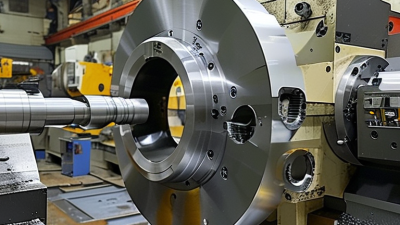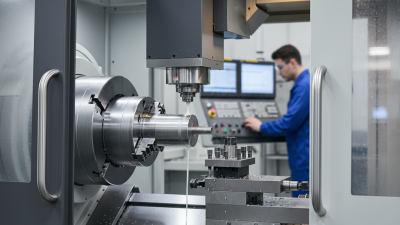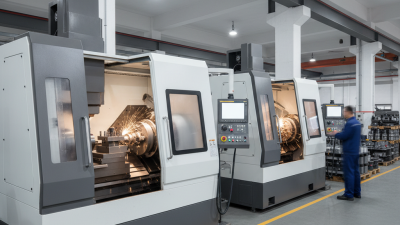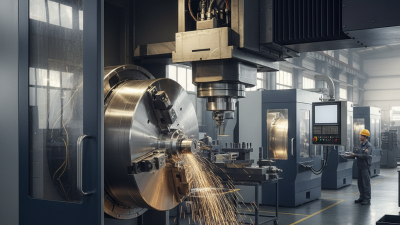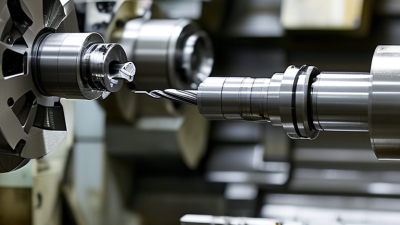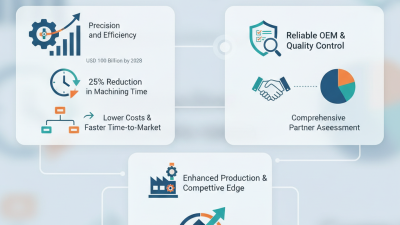
When you're trying to pick a Big Bore CNC lathe factory in China, it's really more than just comparing prices or looking at those glossy catalog pics. Sure, those matter, but you also wanna dig into their machining experience, how deep their engineering know-how runs, and what kind of inspection systems they have in place. Oh, and don’t forget about their after-sales support—that can make or break your experience. Bigger names like Shenyang Machine Tool, Dalian Machine Tool Group, Qinchuan, and Beijing No.1 are often good places to start, but keep in mind, their capabilities can vary quite a bit from one product line or factory site to another.
A solid supplier should be able to clearly explain details like spindle bore size, max turning diameter, chuck capacity, bed construction, and spindle power—no vague answers here. It’s a good idea to ask for test-cut samples or records to get a real feel. Also, review their dimensional reports, machine calibration docs, and the brands of parts they use. A serious manufacturer should be able to show you how their machines handle long pipes, heavy shafts, or interrupted cuts without trembling like a tuning fork. The little things matter too—don’t overlook the chip conveyor, for example.
This guide is all about comparing Chinese manufacturers based on real, practical criteria—not just marketing talk. We look at factory size, how flexible they are with customization, their export track record, their tech support, and how reliably they deliver. Sure, a good reputation helps but don’t take it as gospel. Sometimes online info is outdated, overly polished, or just plain false. It’s worth taking a closer look—verify current certifications, visit their factories if you can, and ask for references from guys who are actually using their equipment.
Keep in mind, smaller factories might be quicker on customization and flexibility, while bigger ones might have more comprehensive documentation and better support networks. Ultimately, the best choice depends on what you’re working with—material, size of workpieces, production volume, needed tolerances, and whether you need local support. So, do your homework—they all require some careful checking to get it right.
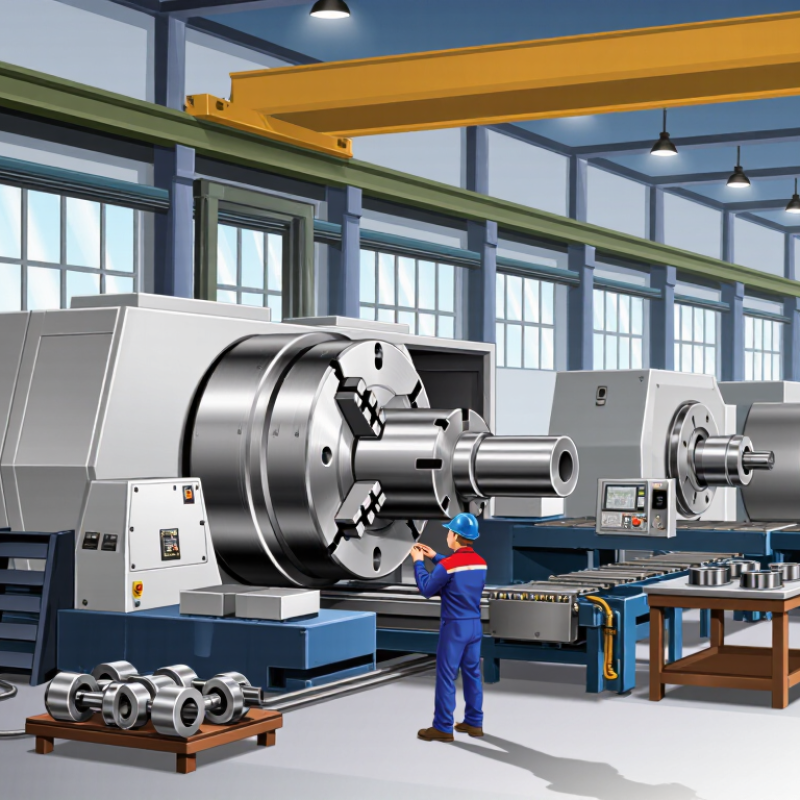
A top big bore CNC lathe factory in China is defined by more than a large spindle hole. It must combine rigidity, repeatable accuracy, and practical production experience. Heavy castings, reinforced beds, and stable spindle bearings help control vibration during deep boring. A useful factory should also explain its maximum bar capacity, chuck load, turning diameter, and boring depth clearly.
Experienced engineers test machines with demanding materials, such as alloy steel and stainless steel. They monitor surface finish, thermal drift, tool wear, and dimensional changes after long cutting cycles.
Inspection records should include calibrated measuring equipment, sample reports, and traceable component data. ISO-based quality procedures can support reliability, but certificates alone prove little. The real evidence comes from consistent test results.
Good communication matters. Technical staff should understand drawings, tolerances, coolant requirements, and production rhythm before suggesting a configuration. After delivery, installation guidance, operator training, spare-part access, and remote troubleshooting reduce downtime. Some factories respond quickly but document poorly. That weakness deserves attention. A top supplier should admit machine limits instead of promising perfect results. Factory visits, test cuts, and conversations with current users can reveal details that brochures often miss. Reliability is built through visible processes, not impressive claims.
China’s big bore CNC lathe industry is concentrated around several strong manufacturing regions. The Yangtze River Delta, including Shanghai, Jiangsu, and Zhejiang, offers dense supplier networks and mature engineering services. Foundries, gear makers, control suppliers, and inspection companies often operate within short transport distances. This reduces delivery delays and supports faster technical communication.
The Pearl River Delta, centered around Guangdong, is known for flexible production and practical machining experience. Many workshops serve automotive, energy, and general industrial customers. Their Big Cnc Lathe facilities may provide large swing diameters, heavy-duty beds, and customized spindle options. Factory visits should include casting inspection, guideway finishing, and live cutting tests. The machine must perform beyond a polished showroom demonstration.
Northern clusters around Shandong, Liaoning, and Hebei also have important heavy equipment capabilities. These areas often support large castings, structural fabrication, and traditional machine-tool production. Their strength can be valuable for oversized workpieces and rugged shop conditions. However, regional reputation alone proves little. A cluster can hide uneven quality. Buyers should check calibration records, process-control documents, operator training, and after-sales response times. Some suppliers communicate confidently but provide limited testing evidence. That gap deserves careful questioning. Even experienced purchasers can overlook installation support, floor requirements, or local service capacity.
China’s leading big bore CNC lathe manufacturers serve oil equipment, power generation, shipbuilding, and heavy engineering. Their factories usually combine casting, machining, assembly, and inspection under one roof. This arrangement can shorten production delays and improve traceability.
A reliable factory should show real experience with large shafts, flanges, pipes, and irregular workpieces. Ask for spindle bore dimensions, maximum swing, chuck capacity, and tested cutting samples. A capable Large Bore Cnc Lathe should maintain stable accuracy during long cycles, not only during a showroom demonstration. Look for hardened guideways, rigid beds, reliable drives, and accessible service documentation. In factory visits, inspect coolant management and chip removal. Small details reveal daily discipline.
Quality evidence matters more than polished brochures. Leading Chinese manufacturers often provide material certificates, dimensional inspection reports, and machine run-off records. Check whether technicians measure repeatability after continuous operation. Ask how they handle software updates, spare parts, operator training, and remote support. Some suppliers communicate well before payment but respond slowly after installation. That risk deserves attention. Production capacity may also be overstated when subcontracted components are involved. A careful buyer should verify assembly areas, testing equipment, export experience, and actual delivery schedules before selecting a long-term manufacturing partner.
What Are the Top Big Bore CNC Lathe Factories in China?
Core Machine Specifications and Performance Standards
A reliable Big Cnc Machine factory should publish measurable specifications, not broad claims. For big-bore turning, buyers commonly examine spindle bores from 100 to 300 millimeters. Bed swing may exceed 1,200 millimeters, while maximum turning diameters often reach 800 millimeters. These figures suit oilfield sleeves, large flanges, and heavy steel shafts. The 2024 Grand View Research report values the global CNC machine market at approximately USD 88.7 billion in 2023. This growth increases competition, but it also makes verification more important.
Performance testing should follow recognized standards. ISO 230-2 supports positioning accuracy and repeatability checks. ISO 13041 is relevant to turning-center performance evaluation. A serious factory should provide laser-interferometer results, thermal compensation records, and spindle runout data. Practical targets include positioning accuracy near ±0.01 millimeter and spindle runout below 0.01 millimeter, depending on machine size. These numbers require defined test conditions.
Load testing reveals more than a polished brochure. Ask for cutting videos using comparable materials and tooling. Check whether vibration appears during a 150-millimeter boring operation. Review spindle torque curves, continuous power ratings, and guideway protection. CMTBA industry statistics continue to show China as one of the world’s largest machine-tool markets, supporting broad manufacturing capacity. Still, capacity is not consistency. Some factories disclose excellent samples but weak after-sales response. That gap deserves attention. A factory’s calibration process, operator training, spare-parts access, and documented acceptance procedure often decide long-term performance.
| Factory Capability Category | Typical Swing Over Bed | Typical Maximum Turning Diameter | Typical Maximum Turning Length | Spindle Bore Range | Spindle Speed Range | Spindle Motor Output | Guideway and Structure | Representative Applications | Relevant Performance Standards |
|---|---|---|---|---|---|---|---|---|---|
| Heavy-Duty Pipe-Turning Configuration | 800–1,200 mm | 500–800 mm | 1,500–3,000 mm | 160–260 mm | 6–800 r/min | 30–55 kW | Box-type bed, wide saddle, hardened guideways, high-load chuck or hydraulic clamping system | Oil and gas pipe, large flanges, tubular components, pressure-vessel parts | ISO 230-2 positioning accuracy; ISO 230-3 thermal behavior; ISO 1708 spindle accuracy; applicable GB/T machine-tool standards |
| Large-Diameter Two-Axis CNC Lathe | 700–1,000 mm | 450–700 mm | 1,000–2,500 mm | 130–220 mm | 8–1,000 r/min | 22–45 kW | Slant-bed or flat-bed construction, linear roller guideways or hardened box ways, automatic lubrication | Mining shafts, industrial rollers, large sleeves, hydraulic cylinders | ISO 230 geometric tests; ISO 13041 turning-center test procedures; laser or ball-bar verification where specified |
| Extra-Large Bore Production Lathe | 900–1,500 mm | 600–1,000 mm | 2,000–6,000 mm | 200–320 mm | 4–500 r/min | 45–75 kW | Reinforced welded or cast bed, segmented support, high-torque gearbox, steady-rest provisions | Wind-power shafts, marine components, large gear blanks, heavy engineering parts | ISO 230-1 geometric accuracy; ISO 230-4 circular tests; vibration and runout inspection under documented load conditions |
| CNC Pipe Threading and Turning Lathe | 600–900 mm | 400–650 mm | 1,000–3,000 mm | 120–220 mm | 5–600 r/min | 22–45 kW | Rigid headstock, high-torque spindle drive, synchronized threading control, replaceable jaw systems | API-style pipe threads, casing, tubing, couplings and threaded tubular products | ISO 13679 or project-specific thread qualification; API requirements only when the machine is configured for applicable API production processes |
| Heavy-Duty Turning Center with Live Tooling | 700–1,100 mm | 450–750 mm | 1,000–2,500 mm | 100–180 mm | 3,000–6,000 r/min with reduced speed at high torque | 30–55 kW main spindle; 5.5–15 kW driven tools | Slant-bed design, C-axis interpolation, hydraulic chuck, turret with driven-tool stations | Complex flanges, valve bodies, eccentric components, one-setup milling and turning | ISO 230-2; ISO 230-4; tool-interface and chuck runout checks according to the machine configuration |
| Large CNC Oil-Country Lathe | 700–1,200 mm | 450–800 mm | 1,500–4,000 mm | 160–280 mm | 4–800 r/min | 30–60 kW | Heavy cast bed, dual-chuck or steady-rest options, high-load carriage, rigid threading gearbox or electronic synchronization | Drill pipes, collars, casing, tubing and large threaded workpieces | ISO 1708 spindle nose accuracy; ISO 230-2 axis accuracy; documented thread-pitch and taper-turning tests |
| Large Precision Turning Factory | 600–900 mm | 350–600 mm | 800–2,000 mm | 100–180 mm | 10–2,000 r/min | 18.5–37 kW | Thermally stabilized structure, precision roller guideways, high-resolution linear scales, controlled assembly environment | Precision sleeves, bearing seats, hydraulic components and large precision shafts | ISO 230-2; ISO 230-3; ISO 230-4; ISO 2768 for general dimensional tolerances where applicable |
| Custom Engineered Heavy-Duty Lathe | 900–2,000 mm | 700–1,500 mm | 3,000–12,000 mm | 220–400 mm or larger | 1–400 r/min | 55–110 kW | Modular bed sections, custom steady rests, multi-support carriage, engineered foundation and chip-management system | Hydropower shafts, marine shafts, turbine rotors, large pressure-equipment components | Customer-approved acceptance protocol based on ISO 230, applicable GB/T standards, dimensional inspection records and load-test documentation |
| Factory Quality-Control Benchmark | Not applicable | Not applicable | Not applicable | Measured bore and spindle runout before shipment | Verified across the specified operating range | Motor power and torque tested against rated data | Leveling, alignment, backlash, lubrication and coolant systems inspected during final assembly | First-article sample, repeatability study, cutting test and customer-specific workpiece trial | ISO 9001 quality system; calibration traceability to ISO/IEC 17025 where required; final acceptance records supplied with the machine |
China’s leading big bore CNC lathe factories distinguish themselves through practical capacity, not attractive brochures. They commonly support spindle bores above 80 millimeters, heavy-duty chucks, and long turning lengths. Their workshops should show tested machines, organized tooling, and clear production records.
A reliable factory uses calibrated coordinate measuring machines, micrometers, bore gauges, and surface roughness testers. Operators inspect critical dimensions during machining, rather than waiting until final assembly. Good quality teams record heat numbers, material certificates, and inspection results for each order. Small details matter here.
Factory engineers should understand cutting forces, vibration control, thread accuracy, and thermal expansion. These skills become important when machining thick-walled pipes or large hydraulic components. Ask for sample inspection reports and tolerance data from comparable projects. General claims are not enough.
Certifications can strengthen trust, but they require careful checking. ISO 9001 indicates a documented quality management system. ISO 14001 may show structured environmental management. Export-oriented facilities may also provide applicable product conformity documents. Verify the certificate number, issuing body, scope, and expiration date.
Experience still needs evidence. A factory may hold valid certificates yet struggle with oversized parts. I would review recent production photos, audit maintenance logs, and inspect packaging methods. No factory is perfect. Even strong suppliers can miss a tolerance when drawings change late. Open communication and corrective-action records reveal more than polished sales language.
When comparing top big bore CNC lathe factories in China, inspect capability before discussing price. A serious review starts with machine size, spindle bore, turning diameter, and available workpiece length. Ask for recent inspection records and sample parts made from similar steel. That sounds simple. It is not. A capable supplier should explain tolerance control, chuck selection, heat treatment, and final measurement methods clearly. Review the factory floor through a live video call or scheduled visit. Check material storage, calibration labels, and operator training. Request drawings, process sheets, and test-cut photographs before placing an order.
Price comparisons require more than reading the final number. Ask each factory for an itemized quotation covering tooling, software, packing, delivery, installation, and spare parts. Separate one-time engineering fees from recurring production costs. A low quote may exclude alignment work or inspection equipment. Check lead times against your production schedule. I have seen attractive offers become expensive after repeated revisions. This detail matters. Confirm payment stages and warranty response times in writing.
Customization should match your actual process, not a sales checklist. Discuss hydraulic systems, steady rests, live tooling, chip removal, control preferences, and automation interfaces. For a Horizontal Bore Machine, verify boring accuracy under continuous load. Require a documented acceptance test using your material and target dimensions. Reliable factories welcome technical questions and provide measurable answers. Still, no factory is perfect. Leave room for design changes after trial cutting, because real chips often reveal problems drawings miss.
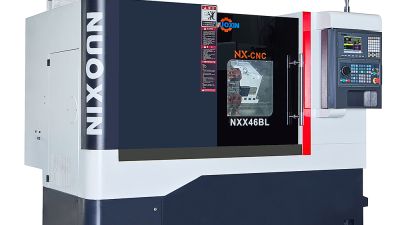
Driven by the growing demand for precision, automation, and flexible production highlighted in the 2024 World Machine Tool Survey and Grand View Research outlook, the China CNC Lathe NXX-46BL with Rotary Turret is designed for modern factories and international suppliers. Its intelligent CNC control system supports stable, user-friendly operation, while the high-quality spindle assembly, ultra-precision bearings, and responsive servo motor deliver accurate rotation and dependable performance. Customers can select either a cost-effective domestic X/Z-axis drive or a premium imported servo system to match their requirements for speed, positioning accuracy, and investment control.
Precision ball screws, paired with high-grade bearings, provide excellent transmission accuracy and axial rigidity. Durable linear guideways ensure smooth movement and long service life during demanding machining cycles. The machine is available with either a hydraulic or servo-driven rotary turret for rapid tool indexing and precise positioning. A high-strength cast-iron bed and base effectively reduce vibration, supporting consistent results in challenging factory environments. Safety and reliability are enhanced through quality electrical and hydraulic components, while every configuration can be customized or upgraded to suit different materials, workflows, production volumes, and factory automation plans.
It combines rigid castings, stable spindle bearings, repeatable accuracy, and real production experience. Large holes alone prove little.
Review spindle bore, maximum bar capacity, chuck load, turning diameter, and boring depth. Confirm the figures in writing.
Request sample parts, inspection reports, tolerance data, and test-cut photographs. Calibrated gauges should appear in the records.
Experienced engineers test alloy steel, stainless steel, and other demanding materials. They monitor vibration, tool wear, and surface finish.
No. Certificates support trust, but test results matter more. Verify the certificate number, scope, issuer, and expiration date.
Request itemized quotations covering tooling, software, packing, delivery, installation, and spare parts. A low price may hide alignment costs.
Discuss hydraulic systems, steady rests, chip removal, automation interfaces, and control preferences. Match features to your real process.
Use an acceptance test with your material and target dimensions. Confirm payment stages, warranty response times, training, and spare-part access.
Vague tolerance claims, poor records, unclear limits, and slow technical answers deserve attention. A perfect supplier does not exist. Be cautious.
China’s top big bore cnc lathe factories are defined by their ability to produce large-diameter, high-precision machines for demanding industries such as energy, transportation, heavy equipment, and general engineering. Leading factories are typically located in established manufacturing regions with strong metalworking supply chains, skilled technicians, and efficient industrial infrastructure. Their capabilities often include customized spindle bores, powerful turning capacity, rigid machine structures, advanced control systems, and stable performance for large and heavy workpieces.
When evaluating suppliers, buyers should compare maximum swing, spindle bore, load capacity, machining accuracy, speed range, tooling systems, and automation options. A reliable factory should also demonstrate documented quality-control procedures, component testing, final inspection, technical support, and relevant management or product certifications. Price should be assessed alongside machine configuration, delivery schedule, warranty coverage, installation, training, and after-sales service. Careful comparison of manufacturing capacity and customization flexibility helps buyers select a dependable supplier that can meet both present production requirements and future expansion plans.