Inquiry
Form loading...
China’s Servo Rotary Turret CNC lathe industry is really stepping up its game, becoming more competitive, precise, and geared toward exports. Manufacturers are now blending features like live tooling, servo-driven indexing, automatic bar feeding, and high-speed spindles—all aimed at tackling complex parts used in automotive, aerospace, medical, and general engineering fields.
According to Fortune Business Insights, the global CNC machine market was valued at around USD 83.99 billion in 2023, and it's expected to grow quite a bit—up to about USD 137.33 billion by 2032. This growth definitely puts China in a strong position as a major manufacturing hub. But, honestly, size isn't everything. What's more crucial is the quality of manufacturing on the shop floor. Think about it: a turret that indexes accurately after thousands of cycles can save tons of time on inspection and rework—way more impactful in the long run.
Yoram Koren, a well-known expert in manufacturing automation, once said, “The ultimate goal of flexible automation is to achieve mass production efficiency with batch production flexibility.” That pretty much sums up why modern factories are so into systems like Servo Rotary Turret CNC lathes. They make changing setups quicker while still being able to handle a wide variety of part geometries. But don’t get fooled by specs alone. A bigger motor doesn’t automatically mean better surface finish. Things like thermal stability, the quality of control software, service support, and operator training are just as important.
In this guide, we’ll take a look at ten leading Chinese manufacturers, including big names like SMTCL, Dalian Machine Tool Group, Haitian Precision, and QCMT&T. We’ll compare their machine structures, turret capacities, servo performance, custom features, quality systems, export experience, and after-sales support. Keep in mind—there's no one-size-fits-all ranking here. Buyer needs vary a lot. For example, a small workshop might care most about the machine’s footprint, while an aerospace company might focus on micron-level repeatability and traceability for inspections. Ultimately, the best choice isn’t always the cheapest. It’s the machine that reliably delivers on your specific parts and requirements.
Definition and Role of Servo Rotary Turret CNC Lathes
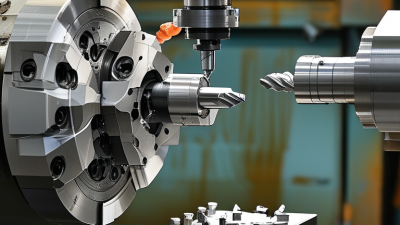
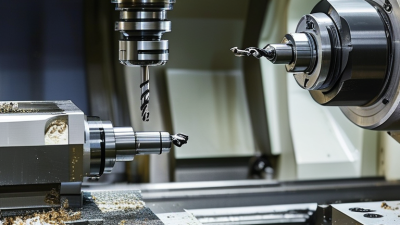
A servo rotary turret CNC lathe is an automated turning machine with a motor-driven tool turret. The turret indexes cutting tools into position with programmed precision. Servo motors control rotation, feed, and positioning through feedback sensors. This arrangement supports turning, drilling, boring, threading, and limited milling operations in one setup.
Its role is practical. It reduces tool-change delays and limits repeated workpiece alignment. A typical turret may hold 8 to 12 tools, depending on machine design. That capacity helps manufacturers produce shafts, bushings, fittings, and hydraulic components efficiently. The machine also improves repeatability when operators maintain correct offsets, coolant flow, and workholding pressure.
Grand View Research estimated the global CNC machine market at about US$88 billion in 2023. Its forecast indicates continued expansion through 2030, driven by automation and precision manufacturing. MarketsandMarkets also identifies multi-axis machining and smart factory integration as major market trends. These reports describe the wider CNC sector, not servo turret lathes alone. That distinction matters.
In factory use, cycle time is only one measure. Energy consumption, tool life, spindle load, and first-pass yield reveal more. A faster turret can still create waste if its calibration drifts. This is often overlooked. Buyers should examine positioning accuracy, service response, control compatibility, and operator training. Published specifications help, but real production trials remain more reliable than brochures.
| No. | Data Dimension | Factual Definition or Typical Value | Role in CNC Lathe Performance |
|---|---|---|---|
| 1 | Definition | A servo rotary turret is a motor-driven tool holder that indexes multiple cutting tools to a programmed machining position. | It enables automatic tool selection and combines turning, drilling, boring, threading, and other operations in one CNC setup. |
| 2 | Common Station Capacity | Eight to twelve stations are common on compact and general-purpose CNC lathes; larger turrets may provide 16 or more stations. | More stations allow a greater number of tools to remain loaded, reducing tool changes, setup time, and operator intervention. |
| 3 | Indexing Accuracy | High-quality servo turrets commonly specify repeatability in the range of approximately ±0.002° to ±0.005°, depending on design and test method. | Accurate and repeatable indexing keeps each tool aligned with the workpiece, supporting consistent dimensions and surface quality. |
| 4 | Adjacent Indexing Time | Approximately 0.2–0.5 seconds is a representative range for adjacent-station indexing on many production-oriented servo turrets. | Short indexing time reduces non-cutting time and improves cycle efficiency, particularly in parts requiring frequent tool changes. |
| 5 | Tool Interface | BMT and VDI are widely used turret tool-mounting standards; the selected interface depends on machine size and tooling requirements. | A rigid, standardized interface improves tool mounting repeatability, rigidity, maintenance convenience, and tooling availability. |
| 6 | Live-Tooling Speed | Servo-driven live tooling commonly operates around 3,000–6,000 rpm; specialized configurations can reach higher speeds. | Live tooling allows milling, cross-drilling, slotting, and other secondary operations without transferring the workpiece to another machine. |
| 7 | Typical Bar Capacity | General-purpose CNC turning centers commonly support bar capacities of about 42–80 mm, while compact and heavy-duty models cover different ranges. | Bar capacity determines the maximum stock diameter that can pass through the spindle and directly affects suitable workpiece size. |
| 8 | Spindle Speed Range | Medium-size CNC lathes often use maximum spindle speeds of approximately 3,000–5,000 rpm; small-diameter turning models may provide higher speeds. | The spindle-speed range affects cutting speed, productivity, achievable surface finish, and the range of materials that can be machined efficiently. |
| 9 | Servo Control and Feedback | A servo motor, drive, position sensor, and CNC control work together to command and verify turret movement and locking. | Closed-loop control improves positioning reliability, reduces indexing errors, and supports automatic monitoring of turret status. |
| 10 | Primary Industrial Role | Servo rotary turret CNC lathes are used for repeat production of shafts, bushings, flanges, fittings, automotive components, and precision mechanical parts. | Their main value is process integration: fewer setups, reduced work-in-process handling, shorter cycle times, and improved dimensional consistency. |
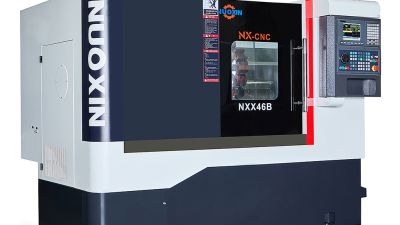
The CNC lathe market is increasingly shaped by demand for higher productivity, repeatable accuracy, flexible automation, and lower operating costs. As manufacturers face shorter delivery cycles and more varied production requirements, machines must combine intelligent control with dependable mechanical performance. The NXX-46B addresses these needs through an intuitive CNC interface, flexible programming, and a rigid structure designed to support stable machining across a wide range of applications.
Its precision spindle assembly uses high-grade Japanese bearings to support high-speed, high-accuracy cutting, while the spindle motor and drive provide strong power and smooth speed regulation. Precision ball screws, low-friction bearings, and high-quality linear guideways on the X and Z axes help maintain positioning accuracy and long-term reliability. Customers can also select different servo and turret configurations, allowing the machine to be matched to specific production targets, material requirements, and investment plans.
A vibration-dampening cast iron bed enhances structural stability and helps preserve machining precision during extended operation. Reliable electrical and hydraulic components further simplify maintenance and support consistent daily performance. With customizable configurations, the NXX-46B matters because it offers manufacturers a practical balance between advanced capability, production flexibility, and cost efficiency in an evolving CNC lathe market.
Its servo-driven turret changes tools quickly and improves positioning consistency. This helps during repeated production. Faster is not always better.
A hydraulic tailstock supports longer shafts, pins, and stepped components. Firm rear support can reduce vibration near the workpiece end. Check the pressure range carefully.
They commonly produce automotive parts, hydraulic fittings, agricultural components, and general engineering products. Always test your actual material before purchase.
Some models include live tooling for drilling, tapping, and milling. One setup may reduce handling errors and protect critical dimensions. Results can still vary.
Review turret indexing time, tailstock pressure, maximum bar capacity, spindle speed, and bed rigidity. Test the longest planned workpiece. Catalog figures may disappoint.
Watch for chatter, poor chip breaking, unstable coolant flow, and awkward tool access. A short trial cut can reveal these issues. Showrooms hide some weaknesses.
Request spindle runout records, turret indexing tests, sample parts, and inspection reports linked to the machine’s serial number. Claims need evidence.
Confirm installation guidance, remote diagnostics, spare parts, response times, warranty terms, manuals, and customs paperwork. Check crate treatment and moisture protection. Service promises can remain vague.
A Servo Rotary Turret Cnc Lathe is an advanced turning center that combines servo-driven turret indexing, high-speed rotation, and precise computerized control to improve machining efficiency and flexibility. This article explains its role in modern manufacturing, including multi-operation processing, reduced setup time, improved positioning accuracy, and stable production of complex components. It also introduces key technologies such as servo motors, CNC control systems, live tooling, automatic tool management, rigid machine structures, and integrated safety functions.
The guide presents a practical framework for evaluating China’s top 10 Servo Rotary Turret Cnc Lathe manufacturers without focusing solely on price. Important criteria include engineering capability, machine accuracy, customization options, quality control, certifications, after-sales support, spare-parts availability, delivery reliability, and export experience. It further compares common product features and applications in automotive, electronics, aerospace, medical equipment, energy, and general precision manufacturing, helping buyers select suitable equipment for productivity, long-term stability, and international service requirements.