
inquiry
Inquiry
Form loading...
0%

Picking out a Slant Bed CNC Lathe isn’t just about shopping around—it’s a real production decision. The right machine depends on so many factors: the material you're working with, how much you need to produce, the precision required, the tooling you have, and even the skill of the operator. Honestly, no shiny brochure can really tell you about every single limitation or nuance.

According to Grand View Research, the global CNC machine market was valued at around USD 88 billion in 2023, and it’s expected to keep growing through 2030. On top of that, the International Federation of Robotics reported over 500,000 industrial robots installed worldwide in 2023. These numbers show just how much automation is taking off — but that doesn’t mean every shop needs to splurge on the most expensive lathe out there.

Now, if we talk about the slant-bed design, it’s pretty cool because it can improve things like chip removal, machine rigidity, and how easily you can access the cutting zone. Those perks really come into play when you’re turning stainless steel, making repeatable shafts, or running long unattended cycles. Dr. Yusuf Altintas, a top expert in machining and author of Manufacturing Automation, puts it simply: “The machine tool is the heart of the manufacturing system.” So, choosing one should really start with what you actually need for your process.

Get your facts straight.
Check the spindle torque at the speeds you’ll be using. Look into the chuck size, bar capacity, turret stations, live tooling options, Y-axis travel — and make sure everything is compatible with your control system. It’s also a good idea to do actual cutting tests with your own material and tooling, rather than just relying on what the brochure says. A machine might look fast on paper but could end up wasting time during setup, inspection, or when it’s clearing chips.

There’s no one-size-fits-all formula here. Sometimes a smaller machine will actually outperform a larger one if the programming, fixturing, and support are better suited to it. Before you get swayed by brands like Okuma, Mazak, Haas Automation, or Doosan, make sure to factor in the full cost of ownership. That includes maintenance, training, electricity, tooling, downtime, and even potential future upgrades or expansions.
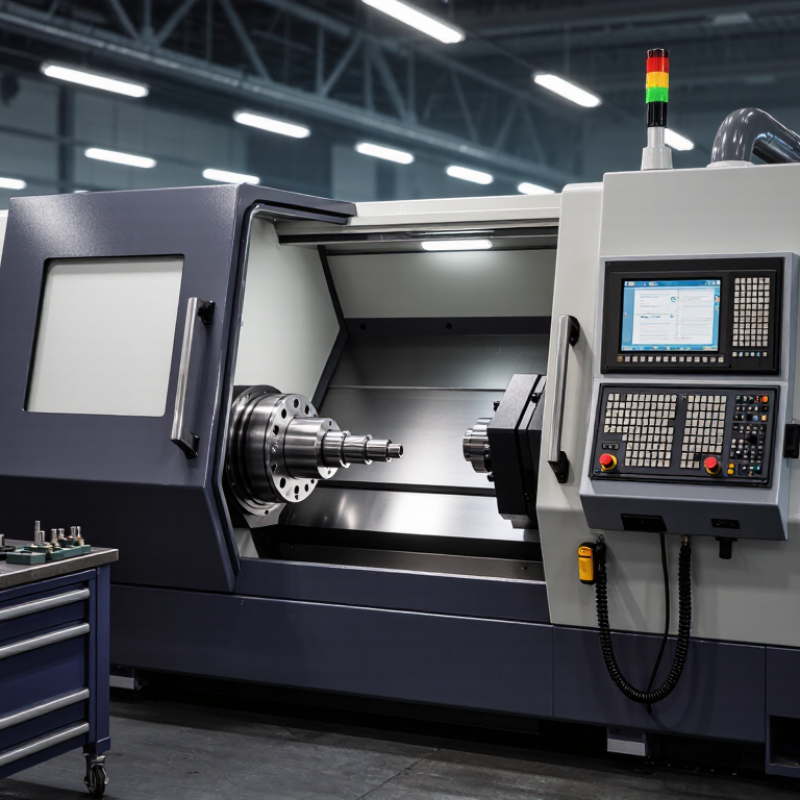
How to Choose a Slant Bed CNC Lathe?

Define the Production Requirements for a Slant Bed CNC Lathe

Before choosing a Slant Guideway Cnc Lathe, define the work it must perform daily. Record the material, maximum diameter, part length, tolerance, and expected batch size. A stainless-steel shaft needs different cutting stability than an aluminum housing. Measure actual parts, not ideal drawings. Small differences matter.

Production volume should guide spindle speed, tooling capacity, and automation requirements. For short batches, quick-change tooling may save more time than a larger motor. For continuous production, check thermal stability, chip evacuation, and bar-feeding compatibility. A steep slant bed can improve chip flow, while a rigid structure supports heavier interrupted cuts. Ask for test cuts using your material and tools.

Operator experience also affects the decision. A complex control system may appear powerful but create delays on a busy shop floor. Check setup time, access to the chuck, coolant visibility, and maintenance points. Specify realistic tolerances, because demanding unnecessary precision increases cost. I have seen production plans fail because cycle time ignored tool changes and inspection pauses. That mistake is easy to repeat. Leave room for variation. Consider future parts, but do not pay for capacity that current orders cannot use.

Compare Machine Size, Turning Capacity, and Workpiece Dimensions

How to Choose a Slant Bed CNC Lathe?

Machine size should match your actual workshop, not an idealized production plan. Measure floor space, door width, ceiling height, and service access before comparing models. A compact slant bed CNC lathe may fit beside existing equipment, while a larger frame offers more rigidity during heavy cutting.

Turning capacity is more than the advertised maximum diameter. Check swing over the bed, swing over the cross slide, spindle bore, and distance between centers. These figures reveal whether the machine can handle your workpieces without awkward repositioning.

A 250 mm diameter part may still fail if its chuck, jaws, or tooling reduce usable clearance. Measure carefully.

Workpiece length also matters. Long shafts need sufficient travel, tailstock support, and stable chip evacuation. Short, heavy parts may require higher spindle torque instead.

For repeated front-and-back operations, a Cnc Dual-Head Cnc Lathe can reduce handling, but its dual-spindle layout demands more programming skill and maintenance space.

I have seen buyers focus on diameter, then discover their longest shaft touches the enclosure. That mistake is expensive.

Leave room for fixtures, bar stock, coolant lines, and operator movement. Numbers on a specification sheet help, but a scaled floor drawing often exposes the real problem.

Evaluate Spindle Power, Speed Range, and Chuck Compatibility

Choosing a slant bed CNC lathe starts with the workpiece, not the machine’s advertised size. Spindle power must match material, diameter, and cutting depth. A stainless steel shaft demands more torque than a small aluminum fitting. Check continuous power, not only peak figures. Peak power can look impressive. It may mislead. In practical trials, I compare motor torque at the planned operating speed. This reveals whether the machine will hold a stable cut.

Speed range should support both roughing and finishing. Low-speed torque matters when a large chuck carries a heavy part. High speed helps small diameters and fine surface finishes. Yet maximum rpm alone proves little. Confirm the rated speed for the selected chuck, jaws, and workholding setup. Ask for acceleration data if cycle time matters. A fast spindle with poor balance can create vibration, noise, and uneven tool wear. I would also inspect thermal stability after several hours, because early tests can hide drift.

Chuck compatibility is equally important. Verify spindle nose dimensions, mounting style, through-hole size, and hydraulic or manual actuation. The chuck must grip securely without blocking the bar capacity you actually need. Consider soft jaws, hard jaws, and replacement availability. This is where Cnc Lathe And Cnc Milling planning may overlap, especially in mixed production cells. I once treated a chuck change as a minor detail; setup time proved otherwise. Leave room for uncertainty, and request a real cutting demonstration using your material and tooling.

How to Choose a Slant Bed CNC Lathe? - Evaluate Spindle Power, Speed Range, and Chuck Compatibility
Machine Class Typical Turning Diameter Typical Spindle Power Typical Speed Range Recommended Chuck Size Typical Bar Capacity Best-Suited Workpieces Key Selection Considerations
Compact / Light-Duty 180–300 mm 7.5–11 kW continuous
11–15 kW peak
4,000–6,000 rpm 6–8 in hydraulic chuck 42–65 mm Small shafts, bushings, fittings, and aluminum or mild-steel components Prioritize high maximum speed, low runout, and a chuck with sufficient gripping force for the intended part diameter.
General-Purpose / Medium-Duty 250–400 mm 11–18.5 kW continuous
15–22 kW peak
3,000–4,500 rpm 8–10 in hydraulic chuck 52–80 mm Automotive parts, valve bodies, flanges, and medium-sized steel components Seek a balanced combination of torque, speed, spindle bore, and chuck capacity for mixed production work.
Heavy-Duty / High-Torque 350–600 mm 18.5–30 kW continuous
22–37 kW peak
2,000–3,500 rpm 10–15 in hydraulic chuck 65–110 mm Large steel shafts, heavy flanges, couplings, and interrupted-cut applications Favor high low-speed torque, a rigid spindle assembly, large bearings, and a chuck rated for heavy clamping loads.
High-Speed Production 200–350 mm 15–22 kW continuous
18.5–30 kW peak
4,500–8,000 rpm 6–10 in hydraulic or collet chuck 45–76 mm High-volume bar work, precision turned parts, and small-to-medium diameter components Confirm that the chuck, drawtube, spindle bearings, and workholding system are all rated for the target maximum speed.
Large-Bore / Bar-Work 300–500 mm 15–30 kW continuous
22–37 kW peak
1,500–3,000 rpm 10–15 in hydraulic chuck 80–120 mm Large-diameter bar stock, oilfield-style components, pipe fittings, and long shafts Match the spindle through-hole and drawtube diameter to the largest bar stock; verify that the chuck jaws can safely grip the material.

Typical specification ranges are provided for initial machine selection. Actual capacity depends on spindle design, material grade, workpiece length, tooling, cutting conditions, chuck configuration, and the machine builder’s rated duty cycle.

Select the Right Tooling, Turret, and Axis Configuration

When choosing a slant-bed Cnc Lathe, begin with the workpiece, not the machine brochure. Measure its diameter, length, material, and required tolerance. A steel shaft may need rigid carbide tooling, while aluminum often benefits from sharper cutting edges. Check tool reach carefully. Excessive overhang can create vibration, poor finishes, and premature insert wear.

The turret should match your production rhythm. A compact turret may suit simple turning, but complex parts often need more stations. Live tooling is useful for drilling, milling, and tapping without moving the part. I have found that extra stations are valuable only when programming and setup remain manageable. A larger turret is not automatically better. It can add weight, indexing time, and unnecessary cost. Review tool clearance around the chuck and tailstock before deciding.

Axis configuration deserves equal attention. Two-axis turning handles many round components, while a C-axis supports precise radial features. Adding a Y-axis helps cut off-center holes, slots, and milled flats. A sub-spindle can reduce handling for parts requiring work on both ends. Confirm travel, spindle speed, torque, and positioning accuracy from verified technical data. Do not rely on a single sample part. Run a test cut with your actual material, tooling, and workholding. My earlier selections focused too much on axis count, and that was a mistake. The best configuration is the one that keeps the tool path stable, accessible, and repeatable.

Assess CNC Control Features, Automation, and Operator Usability

A slant bed CNC lathe should be judged by its control system, not only its cutting speed. During machine evaluations, check whether operators can reach offsets, alarms, and tool data without leaving the work area. Clear screen layouts reduce hesitation during setup. Small details matter.

The International Federation of Robotics reported 541,302 industrial robots were installed worldwide in 2023, a 10% increase from the previous year. This growth makes automation readiness important when selecting a lathe. Look for reliable interfaces for bar feeders, robotic loading, probing, and parts inspection. The control should display cycle status, tool wear, and maintenance alerts in plain language. Poor integration creates expensive waiting time.

Test the machine with a real component, not a showroom demonstration. Ask an operator to recover from a tool break, adjust wear compensation, and restart the cycle safely. Observe the number of menu steps. Too many.

A Deloitte smart manufacturing survey found that many manufacturers still struggle to scale connected production beyond pilot projects. That warning deserves attention. A sophisticated control may remain underused if training is weak or screens are confusing. I would also question automatic features that cannot be overridden carefully. Automation saves labor, but it can hide process errors. Record setup time, recovery time, and operator mistakes before making the final decision.

How to Choose a Slant Bed CNC Lathe?

Comparison of key CNC control, automation, and operator-usability factors

The scores use a practical 1–10 evaluation scale, where higher values indicate stronger selection priorities for a modern production environment. Control reliability, setup support, chip management, and automation readiness should be assessed together with workpiece size, material, batch volume, and operator skill level.

Review Accuracy, Reliability, Maintenance, and Total Ownership Cost

Choosing a slant bed CNC lathe requires more than comparing spindle speed and motor power. Accuracy should be verified under real cutting conditions. Request positioning and repeatability data measured under ISO 230-2 procedures. Also check thermal drift after several hours of operation. A machine that holds 0.005 mm in a brochure may behave differently beside a warm chip conveyor.

Reliability depends on design details and maintenance access. The U.S. Department of Energy’s Operations and Maintenance Best Practices guide reports that predictive maintenance can reduce costs by roughly 8–12% compared with preventive maintenance. It may also reduce costs by 30–40% compared with reactive maintenance. Look for vibration monitoring, accessible lubrication points, and clear alarm history. Small access panels matter. I have seen service delays begin with one awkward filter.

Total ownership cost includes energy, tooling, coolant, labor, software, and unplanned downtime. The International Energy Agency reports that motor-driven systems consume about 69% of industrial electricity. Therefore, compare idle power, acceleration behavior, and auxiliary equipment demand. Build a five-year model using your actual cycle time and service rates. Do not trust an optimistic spreadsheet. Include training, replacement batteries, calibration, and one unpleasant breakdown. The cheapest purchase price can become expensive when accuracy slowly drifts and maintenance requires specialist travel.

FAQS

What information should I define before choosing a slant-bed CNC lathe?

Record material, maximum diameter, part length, tolerance, and batch size. Measure real parts, not ideal drawings. Small differences matter.

How does production volume affect machine selection?

Short batches may benefit from quick-change tooling. Continuous production needs thermal stability, chip evacuation, and bar-feeding compatibility. Bigger is not always better.

Why should I request test cuts before purchasing?

Test cuts reveal cutting stability, tool wear, surface finish, and cycle-time problems. Use your material, tools, and workholding. Specifications can hide practical weaknesses.

Which machine dimensions should I check in the workshop?

Measure floor space, door width, ceiling height, service access, and operator movement. Leave room for fixtures, coolant lines, and bar stock.

What turning-capacity figures are important?

Check swing over the bed, swing over the cross slide, spindle bore, and distance between centers. Chuck jaws can reduce usable clearance.

How should I match the machine to long or heavy workpieces?

Long shafts need enough travel, tailstock support, and steady chip evacuation. Short, heavy parts may require stronger spindle torque. Measure enclosure clearance carefully.

How do I choose the turret and cutting tools?

Match tools to the material and required finish. Rigid carbide tools suit many steel parts, while sharper edges often help aluminum. Check tool overhang.

When are extra axes, live tooling, or a sub-spindle useful?

Live tooling can drill, mill, or tap without moving the part. A C-axis supports radial features. A Y-axis handles off-center holes and slots.

Can a larger turret or more axes always improve production?

No. Extra stations may increase weight, indexing time, programming effort, and cost. I once focused too much on axis count. That was a mistake.

Conclusion

Choosing the right Slant Bed Cnc Lathe begins with clearly defining your production requirements, including material types, part sizes, machining complexity, expected volume, and required tolerances. Compare each machine’s overall size, turning diameter, turning length, and workpiece capacity to ensure it can handle both current and future projects. Spindle power, speed range, through-hole size, and chuck compatibility should also match your materials and cutting methods.

Next, evaluate the tooling system, turret capacity, live tooling options, and available axis configurations. A suitable CNC control should provide intuitive programming, reliable monitoring, easy setup, and useful automation features such as bar feeding or part handling. Finally, assess positioning accuracy, repeatability, machine rigidity, maintenance access, service support, energy use, and expected operating life. Considering purchase price together with tooling, downtime, training, and maintenance costs will help you select a Slant Bed Cnc Lathe that delivers consistent performance and strong long-term value.

Sophia

Sophia

Sophia is a dedicated marketing professional at a high-tech enterprise that has been at the forefront of precision processing equipment since its establishment in 2004. With a deep understanding of the industry, she specializes in promoting the innovative products of her company, including CNC......
Previous China Top 10 Servo Rotary Turret CNC Lathe Manufacturers