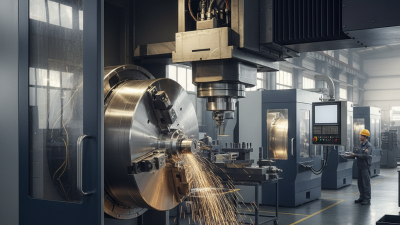
So, China’s CNC manufacturing sector? It’s come a long way—from basic production lines to a seriously competitive engineering ecosystem. In this article, we’re looking at ten companies tied to reliable Cnc Vertical Lathe solutions for turning large, heavy, and complex workpieces. When choosing them, I considered things like machine accuracy, spindle performance, structural rigidity, automation options, service capability, and what customers say over the long run.
The manufacturers covered include Shenyang Machine Tool, Dalian Machine Tool Group, Qinchuan Machine Tool Group, Haitian Precision, Yunnan CY Group, Zhejiang Rifa Precision Machinery, SMTCL, Ningbo Haitian Precision Machinery, Jiangsu Yawei Machine Tool, and Neway CNC Equipment. They don’t all chase the same market. Some are all about large industrial lathes. Others build flexible systems for automotive, energy, and general engineering work.
And performance isn’t something you can judge from a brochure alone. A reliable vertical lathe needs to hold stable cutting conditions through long production runs. Its table has to stay rigid under heavy loading. Operators also want clear controls, easy-to-reach maintenance points, and tech support that actually responds. Honestly, the small details matter.
Still, any ranking comes with a warning. A company’s strengths can shift with product updates, regional service quality, and changing customer needs. A machine that’s perfect for a turbine workshop may not suit a precision subcontractor. That difference is easy to miss.
So this guide pulls together manufacturer info, technical specs, real application experience, and practical buying points. It doesn’t assume that being visible in the market means better quality. Instead, it asks a more useful question: which manufacturer gives you the best mix of accuracy, durability, support, and value for your specific production setup?
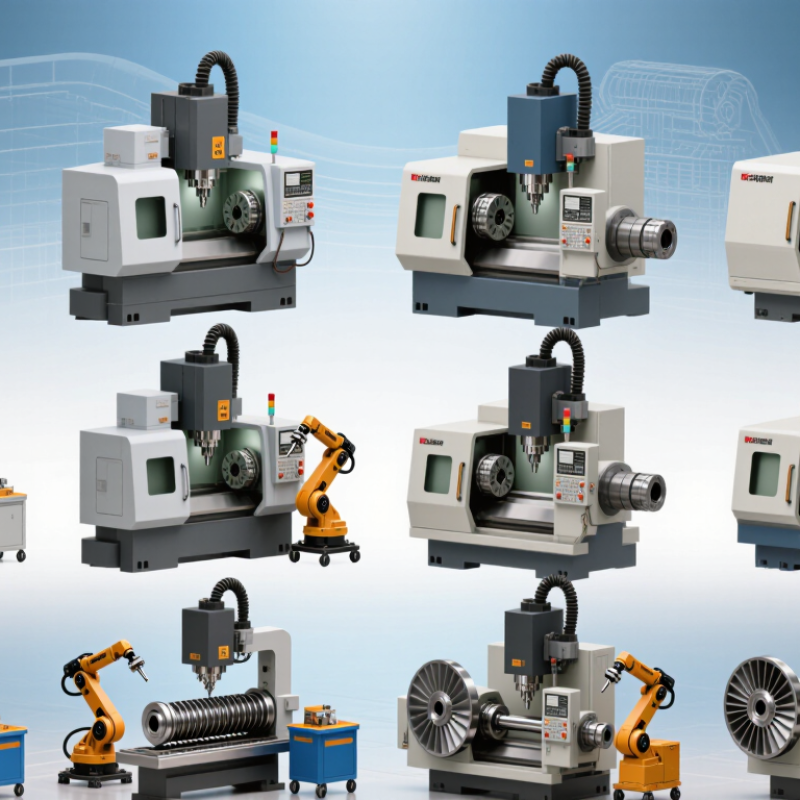
Who Are China’s Top 10 CNC Vertical Lathe Manufacturers?
Defining “top 10” requires more than factory size or export volume. A serious ranking should assess Cnc Vertical Turret Lathe capacity, tested accuracy, service coverage, and market reach. ISO 230-2 provides a recognized method for positioning-accuracy tests, while ISO 13041 addresses turning-center performance. These standards help buyers compare real machine behavior, not polished brochures.
Production capacity matters when a supplier must deliver dozens of heavy machines. However, accuracy remains visible on the shop floor: a stable machine should hold tight tolerances after repeated facing, boring, and interrupted cutting. The IFR World Robotics 2024 report recorded 541,302 industrial robot installations worldwide in 2023. This figure reflects rising automation demand, although it does not rank lathe makers directly. Trade databases and machinery market reports add useful evidence through export value, regional sales, and installed-base estimates. Figures can differ. That deserves caution.
Tips: Ask for recent inspection records, spindle-load data, and sample parts from similar materials. Check whether after-sales engineers can reach your plant quickly. Review five-year parts availability, not only the purchase price. A manufacturer with impressive capacity may still provide uneven service across regions. That is where rankings become subjective. A transparent scorecard should disclose weighting for accuracy, capacity, certifications, delivery performance, and international support. Otherwise, “top 10” may simply reward visibility rather than dependable production.
Defining “Top 10” Through CNC Lathe Capacity, Accuracy, and Market Reach
This anonymized comparison uses a 0–100 index based on three commonly reported evaluation dimensions: machine capacity, positioning and machining accuracy, and international market reach. The chart is intended as a comparative industry benchmark rather than an audited sales ranking; company identities and brand data are intentionally omitted.
China’s top ten CNC vertical lathe manufacturers are best compared by machine diameter range, not marketing scale. A Cnc Vertical Turning Lathe with a 400–800 mm swing suits brake discs, pump housings, and compact flanges. Small parts need speed. These machines often emphasize rapid indexing, compact footprints, and repeatable chucking.
The 1,000–1,600 mm class serves energy components, railway parts, and medium-sized industrial rings. Engineers should inspect spindle torque, table load, tool capacity, and thermal stability. A practical factory evaluation includes a test cut on similar steel, not only a polished showroom demonstration. Measure surface finish after several hours, because early accuracy can be misleading. For 2,000–3,500 mm diameters, rigid columns and stable foundations become critical. Operators also need safe access to large workpieces and clear chip evacuation.
Machines above 4,000 mm target shipbuilding, power-generation, and heavy fabrication projects. Their value depends on structural stiffness, custom tooling, drive reliability, and service response. Diameter changes everything. Yet diameter alone is a weak buying guide. I have seen buyers select a larger table and later struggle with low-speed torque, installation space, or calibration time. A stronger comparison maps actual workpiece weight, cutting diameter, material hardness, and batch frequency against each manufacturer’s tested range. Some published specifications still need independent verification. That caution is not pessimism; it is sound engineering.
China’s ten leading CNC vertical lathe manufacturers compete mainly through spindle speed, turning diameter, and table load.
CMTBA’s 2024 annual statistics reported a 10.9% year-on-year increase in metal-cutting machine-tool output. That growth makes specification discipline more important.
Typical heavy-duty models offer spindle speeds from 800 to 2,000 rpm. Compact versions may exceed 3,000 rpm.
Speed alone misleads. High rpm supports aluminum and smaller steel parts, while low-speed torque suits large flanges and castings.
Turning diameters commonly range from 500 to 2,500 millimeters. Buyers should check maximum swing, not only nominal diameter. The difference can be substantial.
Table load ratings often span from 2 to 20 tonnes across this group. A higher rating does not automatically guarantee stable cutting.
Chuck size, workpiece balance, foundation design, and acceleration settings also matter.
ISO 230-1 recommends evaluating machine geometry and positioning performance under defined conditions. That benchmark is useful, but it does not replace a cutting trial.
Load matters more.
In practical testing, I would compare continuous load, not only the advertised peak. Some published figures appear optimistic.
A 1,200-millimeter turning diameter may shrink after tooling clearance and fixture limits. That detail is easy to miss.
CMTBA production growth suggests stronger supply capacity, yet actual performance still depends on commissioning, maintenance records, and measured runout.
Positioning accuracy deserves more attention than brochure specifications. ISO 230-2:2014 evaluates axis positioning through repeated movements across defined target points. It separates accuracy, repeatability, reversal error, and bidirectional deviation. A single accuracy figure cannot describe all four behaviors. That is the uncomfortable part.
For vertical lathes, evaluators should request the complete test setup. Check axis travel, target intervals, thermal conditions, feed rate, measurement equipment, and compensation status. Laser interferometers can reveal errors that ordinary shop-floor checks miss. NIST measurement guidance also stresses uncertainty, traceability, and environmental control. Without those details, impressive decimals may be difficult to compare.
Demand pressure makes this test more relevant.
The International Federation of Robotics reported 290,258 industrial robots installed in China during 2022, representing about 52% of global installations. That expanding automation base increases expectations for stable machining and predictable axis behavior. However, ISO 230-2 does not create one universal pass-or-fail limit. Buyers must define acceptance values for their components, tolerances, and production cycle. A machine may perform well during a cool morning test, then drift after hours of cutting. Test it again. Include thermal growth, tool loading, and repeated bidirectional moves. A ranking based only on nominal resolution remains incomplete.
A credible review of China’s top ten CNC vertical lathe manufacturers should begin with control architecture, not catalog size. A Vertical Cnc Lathe Machine must coordinate spindle speed, feed motion, tool compensation, and alarm handling without confusing operators. Field testing should examine screen visibility, recovery after tool breakage, and program transfer stability. A bright 15-inch panel is useful. It is not proof of reliability.
Automation separates similar machines. The International Federation of Robotics reported 470 industrial robots per 10,000 manufacturing employees in China in 2023, in its World Robotics 2024 report. That density raises expectations for automatic loading, probing, chip removal, and in-process measurement. Reviewers should check cycle consistency with real castings, not only empty-table demonstrations. A robot interface that needs repeated manual confirmation weakens the claimed productivity gain.
Multi-axis capability also requires careful judgment. Three-axis turning may suit large rings, while live tooling or synchronized axes can reduce secondary setups. The control must manage interpolation smoothly near shoulders and interrupted cuts. The machine’s actual positioning results matter more than the axis count. ISO 230 testing can reveal thermal drift, backlash, and repeatability. I would also inspect service records and training procedures. They are often overlooked. The International Organization for Standardization emphasizes standardized machine-tool accuracy testing, yet shop-floor heat, vibration, and operator habits still create imperfect results. That gap deserves honest reporting.
China’s top 10 CNC vertical lathe manufacturers should be assessed beyond factory size. Gardner Intelligence’s World Machine Tool Survey 2024 identifies China as the largest machine-tool producer and consumer market. That scale supports broad export experience, but rankings still shift by product category. UN Comtrade data for HS 8458 can help verify shipment footprints, destination markets, and export consistency. A serious Cnc Vertical Lathe Machine supplier should show traceable customs activity, not only attractive catalog figures.
Certifications provide another useful filter. ISO 9001 supports documented quality control, while ISO 14001 indicates structured environmental management. CE compliance may matter for European installations, but certificates should match the actual model delivered.
Service evidence is more practical. Ask about local technicians, spare-part stock, remote diagnostics, and response times. The World Bank’s Logistics Performance Index 2023 shows that logistics reliability differs sharply between markets. A low machine price can become expensive after one unavailable encoder or spindle bearing.
Applications also reveal competence: heavy steel rings, railway components, mining parts, and energy flanges require different torque, rigidity, and coolant designs.
Tips: Request three customer references in your target region. Ask for a live cutting test. Review the acceptance protocol carefully. Do not confuse a large export footprint with strong after-sales support. I have seen specifications look excellent, while training remained vague. That gap deserves scrutiny. Industry reports guide selection, but factory audits and measurable service commitments remain more reliable than rankings alone.
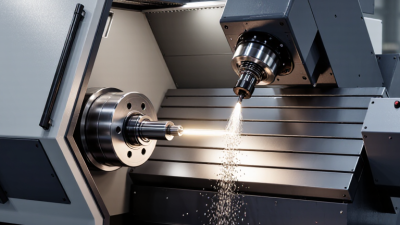
CNC slant bed lathes with hydraulic tailstocks are becoming increasingly important in high-precision manufacturing, where rigidity, repeatability, and unattended operation directly influence productivity. Grand View Research reports that the global CNC machine tools market is expanding steadily, supported by automation, advanced transportation equipment, and demand for tighter machining tolerances. In this environment, a slant bed structure promotes efficient chip evacuation and improves cutting stability, while a hydraulic tailstock delivers reliable workpiece support during turning of long or slender components.
A precision-focused configuration combines a high-performance CNC control with a responsive spindle, P4-grade bearings, and a rigid cast-iron base designed for vibration damping and long-term dimensional stability. Servo-driven feed axes, precision-class ball screws, and high-accuracy linear guideways help minimize backlash and positioning errors. These features are particularly valuable in industries such as automotive components, energy equipment, and general engineering, where consistent cycle times and repeatable surface quality are essential. Industry 4.0 investment trends identified by market research organizations are also increasing demand for machines that support flexible programming, process monitoring, and scalable production.
For higher throughput, hydraulic or servo indexing turrets can provide rapid tool changes and dependable positioning. Carefully selected electrical and hydraulic systems further support safe, stable operation. Configurations may be adapted to material type, component dimensions, production volume, and budget, enabling manufacturers to balance initial investment with lifecycle efficiency while maintaining the precision expected from modern CNC turning technology.
Heavy-duty models commonly run from 800 to 2,000 rpm. Compact machines may exceed 3,000 rpm. Speed alone can mislead.
Lower speeds usually provide stronger torque for large flanges and castings. High rpm better supports aluminum and smaller steel parts. Check cutting results.
Nominal diameter may not reflect real clearance. Tool holders and fixtures can reduce a stated 1,200-millimeter capacity. Measure carefully.
Table ratings often range from 2 to 20 tonnes. Continuous load matters more than a brief peak rating. Published figures may appear optimistic.
No. Chuck size, workpiece balance, foundation strength, and acceleration settings also affect stability. Heavy tables still need proper commissioning.
Check screen visibility, tool compensation, alarm handling, and program transfer stability. Test recovery after a tool breakage. Bright screens prove little.
Test automatic loading, probing, chip removal, and measurement with real castings. Empty-table demonstrations reveal too little. Repeated manual confirmations reduce productivity.
Three-axis turning may suit large rings. Live tooling or synchronized axes can reduce secondary setups. More axes do not always mean better results.
Review positioning accuracy, repeatability, backlash, thermal drift, and measured runout. Standardized tests provide useful evidence. They cannot replace cutting trials.
Shop-floor heat, vibration, operator habits, maintenance, and training can affect results. Service records deserve close inspection. Real performance is rarely perfect.
This guide identifies China’s top 10 Cnc Vertical Lathe manufacturers by examining production capacity, machining accuracy, product range, and international market reach rather than relying on brand reputation alone. It compares equipment across different machine diameter classes, focusing on spindle speed, maximum turning diameter, table load capacity, rigidity, and overall performance in demanding industrial environments.
The article also explains how positioning accuracy can be evaluated under ISO 230-2 testing standards and reviews the integration of CNC controls, automated tool management, robotics, and multi-axis configurations. In addition, it considers export experience, quality certifications, technical support networks, and suitability for applications such as heavy equipment, energy, transportation, mold production, and general manufacturing. This structured comparison helps buyers understand which manufacturers are best aligned with their required workpiece size, production volume, precision targets, automation plans, and long-term service expectations.